North-facing gardens get a poor reputation. The sun arrives late, leaves early, and whatever light does reach the border has a cool, blue cast that seems to flatten everything it touches. But shade is not the enemy of a good garden; it is simply a different design brief. And one of the quickest ways to answer that brief is lying on the ground.
Start with the light, not the stone
Before you look at a single sample bag, stand in the space and watch what the light actually does. A north-facing plot rarely gets strong direct sun, and in winter many borders sit in shade from morning to night. What you do get, usually, is soft, indirect daylight and a lot of reflected light from the sky.
That matters because a pale surface at ground level acts as a quiet reflector. It lifts light upwards into the underside of leaves, into the stems of shrubs and onto fence panels that would otherwise read as a dark wall. Dark gravel does the opposite. It swallows the little light you have and makes the whole space feel deeper and colder than it really is.
Pale pebbles: the brightness workhorses
Creams, ivories, chalk whites, pale buffs and soft limestone tones are the obvious first choice for shade, and for good reason. They brighten a border without competing with the planting, and they make green foliage look greener by contrast.
One caution: brilliant, blue-white gravel can look clinical in shade, and it shows every fallen leaf and footprint. A warm cream or oatmeal is far more forgiving and reads as light rather than glare. If you want the brightest possible floor, look for pebbles described as warm white rather than pure white.
Warm tones that correct cool light
North light leans blue, so stones with a warm undertone quietly cancel it out. Honey, sand, buff, soft amber and pale gold pebbles look gentle rather than yellow in shade, and they glow beautifully in the low, raking light of a late afternoon.
These are the tones to choose if your garden has a lot of brick, terracotta pots or timber. Warm pebbles sit comfortably beside them, while a cold grey floor can make the same materials look slightly tired. If you want something subtler, look for a warm grey, sometimes sold as greige, which carries a hint of sand rather than a hint of slate.
Neutrals that let the planting lead
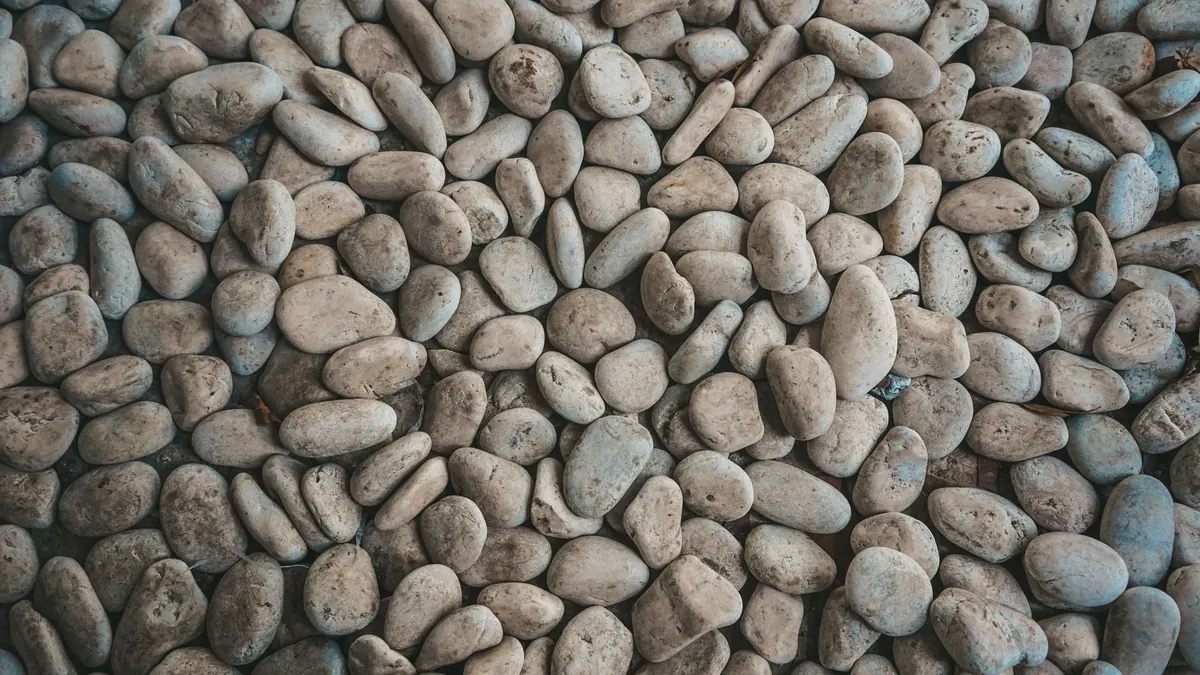
Mid greys, silver-greys, dove greys and mushroom tones are the quiet option, and they suit north-facing gardens well as long as they lean warm rather than cold. Their strength is neutrality: they disappear into the background and let ferns, hostas and hellebores do the talking.
Cool grey gravel against cool shade can feel a little chilly, particularly in winter. The fix is simple. Add warmth elsewhere: a terracotta pot, a copper trough, a wooden bench, a few warm-toned bricks in an edging. The pebbles stay calm and the garden stays welcoming.
Colours to use with care
None of these are banned, but in a north-facing garden they need a deliberate reason behind them.
- Black and charcoal. They absorb what little light there is, and in deep shade they can make a border look like a hole. Small quantities work as a contrast strip against pale paving, not as a main surface.
- Deep reds, browns and plums. Heavy and muddy when wet, which in a damp north corner is most of the winter.
- Strong blues and dyed turquoise. They double down on the blue cast of shade and often look artificial against British planting.
- Bright dyed primaries. The colour fades unevenly, and it fights nearly every leaf in the border.
- Jet-black gravel in a narrow north passage. It will vanish. Use it only where something pale borders it on both sides.
Matching pebbles to UK planting
The planting palette for shade is generous, and your pebble colour should support it rather than duplicate it.
Warm cream or pale buff
Pair with ferns, hostas, white hellebores, snowdrops and white Japanese anemones. The light floor picks out pale flowers and makes variegated foliage, such as Hakonechloa macra or variegated ivy, read clearly from a distance.
Honey or sand gold
Lovely under bronze and purple foliage: Heuchera in plum tones, bronze sedges, Ajuga and the reddish new growth of many shrubs. It also warms up a border edged with clipped box or yew.
Soft silver-grey
Works with green and grey-green leaves, sarcococca, ivy, epimedium and ferns. Add a few pale, smooth stones as a contrast, or a shallow water bowl, to catch what light there is.
In damp shade, keep pebbles as a surface mulch rather than a sealed lid. Leave generous planting pockets and don't bury the crowns of perennials. Good airflow around stems matters more than a perfectly uniform floor.
In shade you are not choosing a colour. You are choosing how much light comes back.
Texture, size and finish matter as much as colour
Two bags of the same colour can look completely different in the garden. Rounded 14–20mm pebbles suit courtyards, paths and pot tops. Larger 20–40mm stones sit better in borders and won't disappear into the soil. Angular chippings look sharper and more architectural; rounded pebbles feel softer and more relaxed.
Remember that pebbles darken dramatically when wet. A pale cream can read as a mid grey after a night of rain, which is exactly the weather a north-facing garden sees most. Wet a handful in a bucket before you decide. Also rinse new pebbles before laying them; the dust that comes off quarry bags dulls the colour for weeks.
How to test before you commit
- Buy a small bag of two or three candidates rather than guessing from photographs.
- Lay each one on a board in the actual spot, at the depth you intend to use.
- Look at them at breakfast, at midday and in the evening, and again after rain.
- Hold a leaf, a pot or a piece of your paving next to each sample. Pebbles that look right alone can jar against a red brick wall or a grey fence.
- Check the edge. If the pebbles meet a lawn or a path, decide now whether you want a steel, timber or brick edging to keep the two apart.
- Order the whole quantity in one batch. Colour and size vary between batches, and a mid-project top-up will show.
Lay pebbles over a weed-suppressing membrane on cleared ground, at around 40–50mm deep for a decorative finish, and deeper where people will walk. Rake them level, then firm gently. A little variation in size and tone always looks more natural than a perfectly uniform surface.
A calmer, brighter floor to build on
You don't need to fight a north-facing garden. Work with its light instead: choose pale, warm or softly neutral pebbles, test them where they will actually sit, and let the foliage take the starring role. Get the floor right and everything above it looks healthier, greener and considerably less gloomy, even in February.
Photo: ClickerHappy / Pixabay