A pebble path is the quiet workhorse of a cottage garden. It slips between a lawn and a border, carries you to the shed without demanding to be noticed, and if the planting is allowed to flop over the edge it becomes half path, half garden. Three things have to agree: the pebble itself, the edging that holds it in place, and the plants that soften it. Get those right and a modest load of shingle will do more for a small British plot than a great deal of expensive paving.
1. The Classic Loose Pebble Path with Brick Edging
This is the picture most people have in mind: a gentle curve, 60–90cm wide, filled with 10–14mm pea shingle and held by a soldier course of brick. Aim for roughly 40–50mm of pebble over a compacted sub-base, with a woven geotextile underneath to stop the stones disappearing into the soil and to slow the weeds.
Set the edging so it sits 15–20mm proud of the pebble. That small lip stops the shingle migrating into the border every time it rains, and it gives you something to run a rake along. Reclaimed brick, laid on edge and haunched in mortar, gives the soft, slightly uneven line that suits old walls and roses. A wavy edge — bricks swung gently in and out — is more forgiving than a ruler-straight one, and it looks better when plants lean across it.
2. Stepping Stones Set in Pebble
For a path that crosses a lawn or climbs a slope, set square flagstones or concrete pavers into the pebble at roughly 60cm centres and fill the gaps. Keep the pebbles flush with the stone so the whole thing reads as one surface. Bed the stones on a firm base so they cannot rock, and pack the gaps with 6–10mm pebbles rather than large cobbles — they settle better underfoot.
This is a good route for anyone unsteady on their feet, because the stones give a predictable, firm landing. On a slope, step each stone down in small increments of 40–60mm to create an informal flight of steps without anything that looks built.
3. Banded and Mosaic Pebble Patterns
A little pattern goes a long way in a cottage garden. A band of darker or paler pebble laid across the path every metre or so works like a rug runner and breaks up a long stretch. Even simpler: a single ribbon of charcoal pebbles down the centre of pale gravel, which reads as a stream and costs nothing extra.
Full mosaics — fans, waves, a spiral — are lovely but laborious. If you want one, draw the outline in sharp sand first, work in small sections, dry-lay the pebbles in position, then fix them into a stiff mortar bed or use a resin designed for the job. Restrict yourself to two or three colours; three is the point at which a cottage path starts to look like a theme park.
4. Resin-Bound Pebble for Heavy Traffic
If your path takes wheelbarrows, bicycles or a mobility aid, loose stone will fight you. Resin-bound aggregate gives you the look of gravel with the surface of a pavement: firm, smooth and scatter-free. It needs a solid base — concrete or tarmac — and a dry spell for installation, so it is a job to plan rather than improvise.
It costs noticeably more than loose pebble, which is why most people reserve it for the main route from gate to door and leave the exploratory paths loose. If you go down this route, use an experienced installer and check what the surface will feel like underfoot after rain, particularly on any slight slope.
5. Pebble Paths That Double as Planting Space
The best cottage paths are generous. Take a metre of ground and only use 45cm of it for walking; the rest becomes a strip of loose pebble where thymes, campanula, erigeron and aubrieta can seed themselves and spill. Alchemilla mollis and hardy geraniums will flop across from the border side, and the path narrows visually without ever becoming impassable.
A pebble clearing at a corner — around a birdbath, a pot of lavender or a garden bench — gives the eye somewhere to rest. A few scattered larger cobbles set into it stop it looking like a car park.
6. Edging Materials and Planting Partners
The edging holds the design together, so choose it before you order stone.
- Clay pavers and reclaimed brick: warm, traditional, laid on edge or in a soldier course set in mortar.
- Granite setts and cobbles: chunkier and more rural; good against flint walls and old timber.
- Tanalised timber or oak: cheap and quick, pinned with pegs; it will soften and eventually rot, so treat it as a ten-year edge.
- Corten or powder-coated steel: a crisp modern line that keeps a mixed planting scheme from looking scruffy.
What to plant along it
Sun: catmint, lavender, thyme, salvias, lamb's ears and lady's mantle. Shade: hardy geraniums such as Geranium macrorrhizum, epimedium, brunnera and hellebores. Scent and self-seeders: sweet rocket, foxgloves, columbines, violas and creeping chamomile between the stones, where it releases its scent as you walk.
7. Keeping a Pebble Path Looking Good
Loose pebble is low-maintenance, not no-maintenance. A short routine once or twice a year keeps it crisp:
- Clear fallen leaves before winter — if they sit on the stones they rot down into a seedbed.
- Rake with a plastic leaf rake to re-level the surface. Never use a metal-headed rake, which will tear the membrane.
- Top up by 10–15mm each spring to cover any that has been kicked into the borders.
- Hand-weed while the ground is damp; roots lift far more easily.
- Reset any edging that has started to wander before the pebble follows it.
Two practical warnings. Wet, rounded pebbles on a slope can be slippery, so use flatter stones on steps and keep any gradient gentle. And don't lay pebble too deep — beyond about 50mm it feels like walking on a beach and pushes about underfoot.
Start with the route you actually walk, not the one that looks best on paper. Sketch it on the ground with a hose or a line of sand, live with it for a week, then dig. The pebbles, the edge and the plants will follow quite naturally.
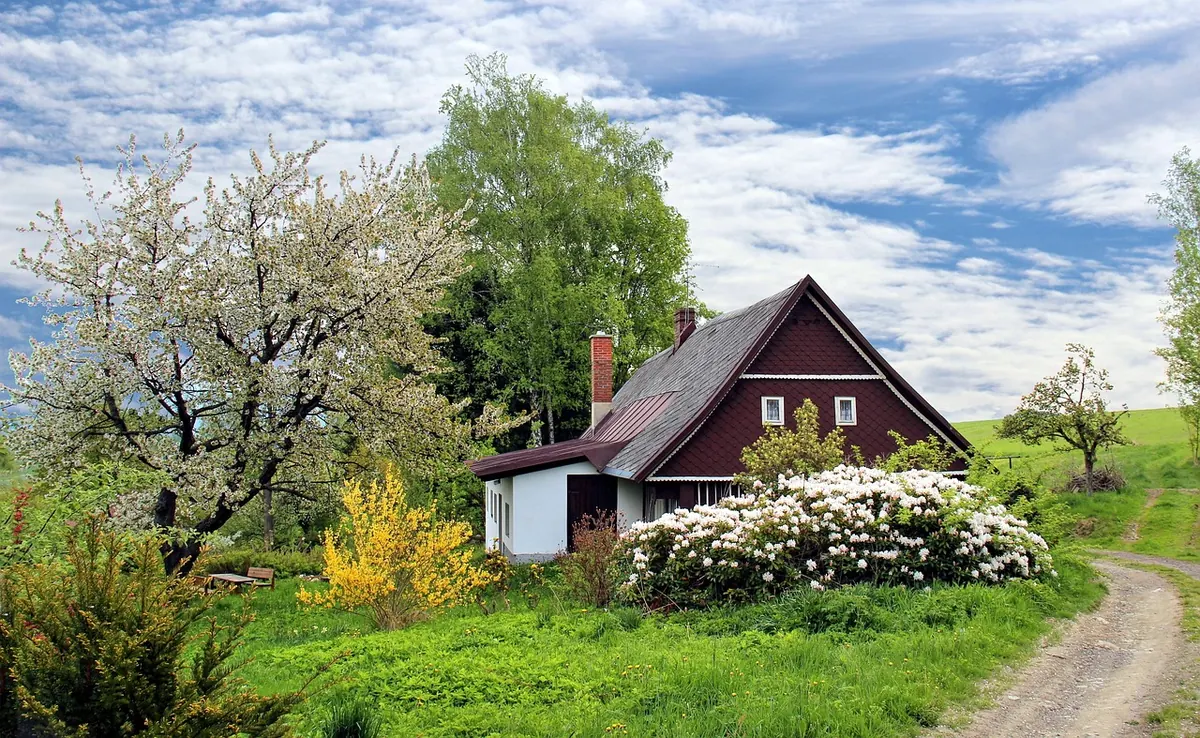
Photo: Stanly8853 / Pixabay